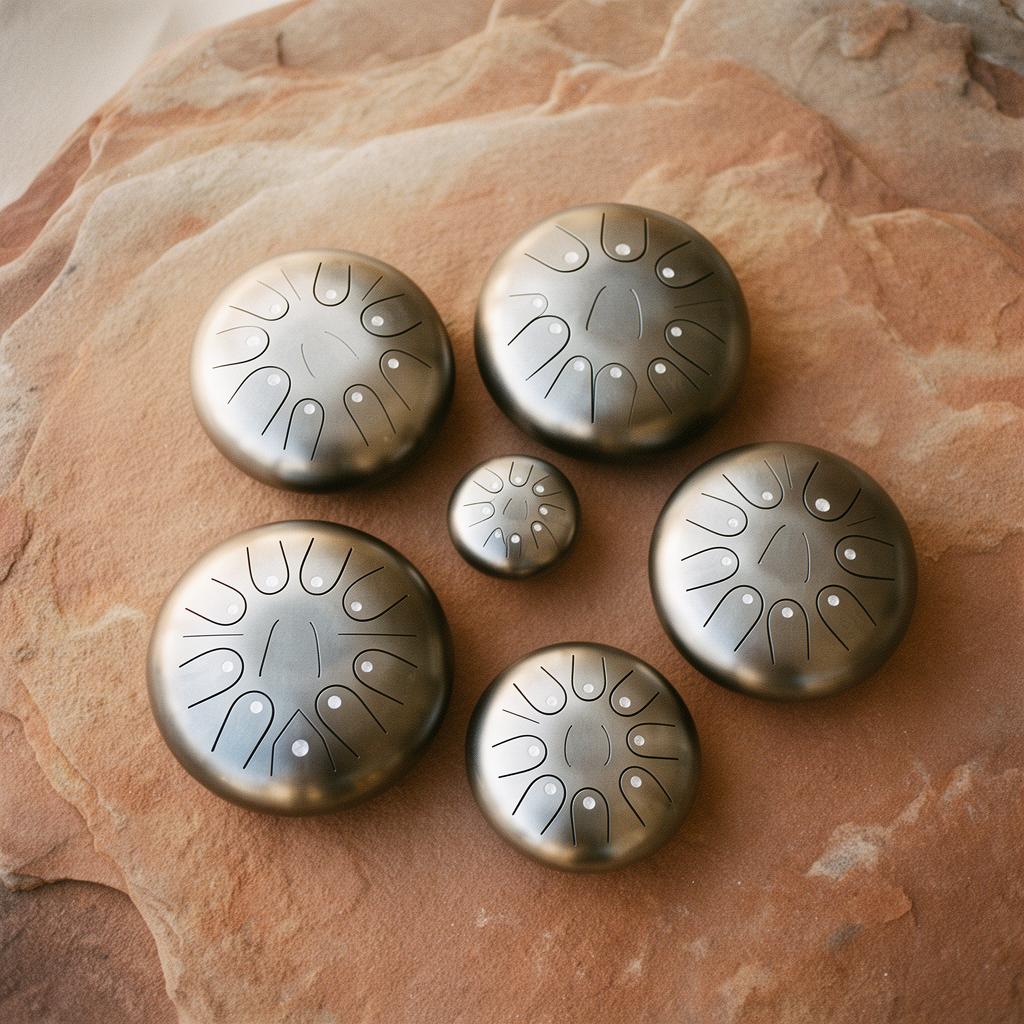
Size, scale, material, tuning — the four things that actually matter when picking your first (or your next) drum.
Walk into the world of steel tongue drums and you will quickly meet dozens of sizes, scales, and price points. Most of it is noise. There are really only four decisions that matter.
1. Size
Steel tongue drums are commonly measured in inches across the top. Each size has a personality.
| Size | Character | Best for |
|---|---|---|
| 6 inches | Bright, high, glassy | Children, travel, melodic accents |
| 8 inches | Balanced, portable | Beginners, meditation, gifts |
| 10–12 inches | Warm, full, resonant | Sound healing, yoga, recording |
| 13–14 inches | Deep, expansive, bass-rich | Performance, professional use |
2. Scale and tuning
The scale of the drum determines its emotional color. The most popular options are:
- ∗D Minor (Akebono) — deep, contemplative, ideal for meditation
- ∗C Major Pentatonic — bright and uplifting, great for beginners
- ∗D Major — warm and joyful, perfect for yoga and family use
- ∗A Kurd / G Kurd — cinematic and emotional, popular with sound healers
If you are unsure, choose D Minor or C Major Pentatonic. They suit nearly any context and remain the most loved scales in our community.
3. Material and finish
Look for titanium-grade or nitrided steel. These materials hold their tuning longer, resist rust, and produce a richer, warmer overtone than basic painted steel. Matte and brushed finishes also tend to age more gracefully than glossy paint.
4. Hand-tuned versus machine-tuned
Machine-tuned drums are consistent and affordable, but the tone can feel sterile. Hand-tuned drums — where a craftsperson finishes each tongue by ear — produce a tone with noticeable character and warmth. If your budget allows, a hand-tuned instrument is worth every dollar.
"Buy the drum you will reach for every day, not the one that looks best in photographs."